https://www.bbc.com/news/world-us-canada-64341875
A screen in New York city displays the US national debt in real time as it climbs

Fire up the giant digital billboards with their ever-increasing dollar displays. Start calculating how much every American man, woman and child owes. Cue the comparisons to a family budget, or credit-card spending or running a small business.
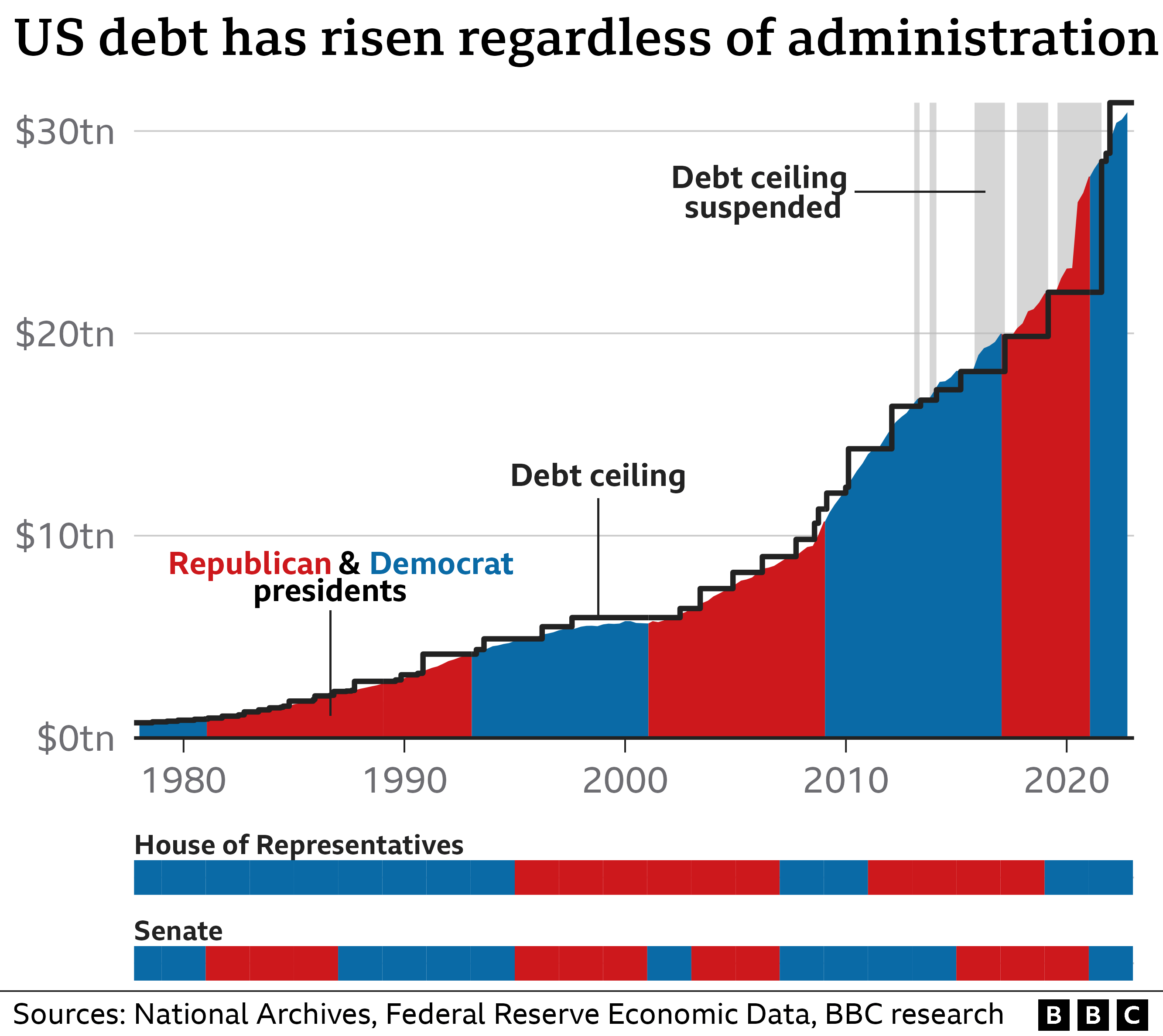
The national debt - and the legally mandated cap on the amount of new debt the federal government can issue - are back in the headlines.
First, a bit of context. The US government is in the enviable position of being able to issue new debt pretty much whenever it wants. American Treasury securities have been viewed as one of the safest, most stable investments in the modern world. In times of economic turbulence, US debt is a harbour in the storm.
If the US issues new government debt in the form of Treasury bonds, bills, notes and securities, there will be investors, both in the US and abroad, who are interested buyers.
While the current figures for the US debt - $31tn (£25tn) and growing - are astounding in both numerical and comparative terms, they do not represent an impending crisis.
The US debt-to-gross-domestic-product ratio, typically a more illuminating measure of a nation's ability to manage its debt, sits at 128%.