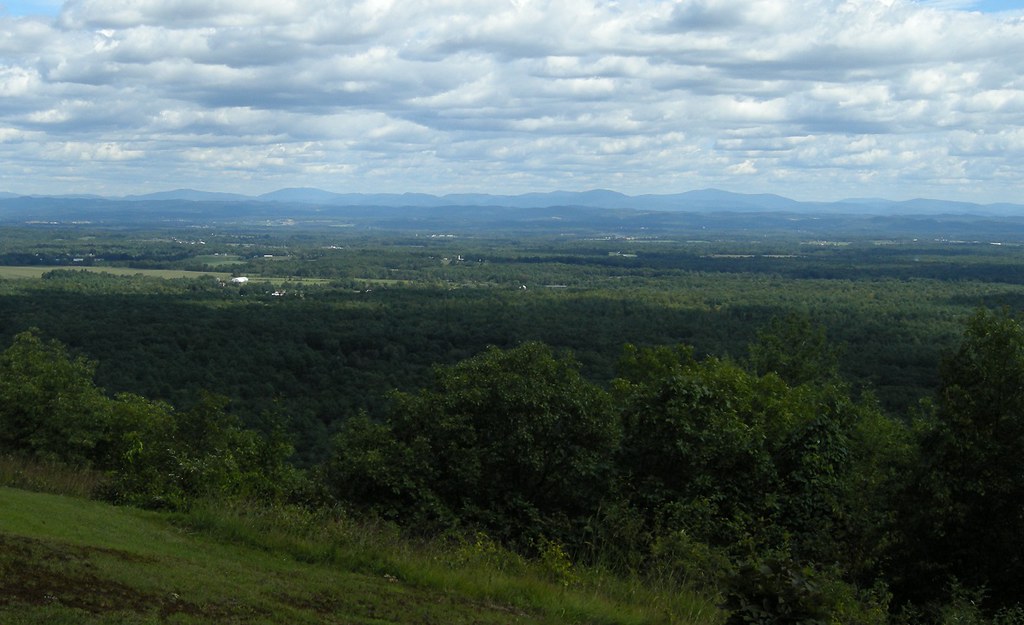
I was up to Albany this past weekend to see my son, who turned 30 in mid-August. I recall the day he was born as if it was yesterday. My view of time passing is relative, as I don’t see it or feel it on my person (yet), but I do observe it in my surroundings. As The Old Man warned me, these 30 years have blown by, despite all efforts to slow them down.
My kid has always been a fan of U. S. Grant. I think it goes back to when he had to write a paper on a U. S. President back when he was in grade school. He chose Grant, for reasons I didn’t really know or understand at the time. Only in recent years has Grant’s political reputation begun to change, one from incompetency and corruption, to magnanimity and an effort to bend racial sensitivities in the country (among many other things). I’ve read his memoirs, twice. While I’m not 100% on board with the homage paid them, they are well written, especially as a military history of the ACW, and there’s little there that could be considered apologist (nor should there be).
So I asked my son if he’d ever been up to Mt. McGregor, where Grant spent the last six weeks of his life. No was his reply, so on Saturday, a couple days before the cottage is buttoned up for winter, we made the 40-plus mile drive up the Hudson Valley to Saratoga Springs, then the last twelve-or-so miles to the mountain.
Grant arrived here on June 16, 1885, having endured what must have been an agonizing train trip from NYC. He’d been diagnosed with terminal throat cancer eight months before. Unable to eat any solid food, his weight had fallen from ~ 240 pounds to less than 100. He was virtually destitute, having lost his modest investments to a Ponzi scheme, and now lived at the generosity of a few friends. It was a time before Presidential pensions, and only a modest army pension recently restored by the Congress. With the encouragement of Samuel Clemens and a few others, he’d begun work on his memoirs, hoping to restore his family’s finances, but his deteriorating condition now made this a race against time.
Upon his arrival, he reportedly said “I propose to fight it out on this line if it takes all summer”, but the battle lasted just 36 days. Grant was, however, able to put the finishing touches on his manuscript. Published by Clemens’ house, it earned the family ~ $450K, a staggering sum in 1885. His wife would live in relative comfort the rest of her life.
I turn 63 this year, the same age as Grant when he died in 1885. It seems very young, even in the context of the nineteenth century. I think if I got snuffed out this year I’d feel somewhat cheated. But then I look at Grant, what he endured and the water he carried, yet I doubt he felt cheated. He cast a long shadow.
Grant at the cottage, four days before he died (courtesy of the Library of Congress):

The cottage today:

Healey